CR2@ICRA2026
Workshop on the Path Towards Generalizable Contact-Rich Robotics: Control and Representation
June 1st, 2026. Vienna, Austria. Lehar 2
Overview
Contact-rich robotics, where robots skillfully interact with the world through physical contact, represents one of the most challenging frontiers in robotics today. Recently, we have seen significant advances in contact representation and control algorithms that also have led to widening gaps between communities. This workshop aims to close these gaps by bringing together leading researchers in the field to participate in a series of facilitated discussions to identify promising research directions, and work toward consensus on key open problems that must be solved to achieve truly generalizable contact-rich robotics systems in the open world.
Important Dates
- Submission Deadline: April 3rd, 2026, Anywhere on Earth.
- Submission for Late-Breaking Results Deadline: May 23rd, 2026, Anywhere on Earth.
- Notification of Acceptance: April 21st, 2026
- Camera Ready Revision (optional) Deadline: May 30th, 2026, Anywhere on Earth.
- Workshop Date: June 1st, 2026
Panelists
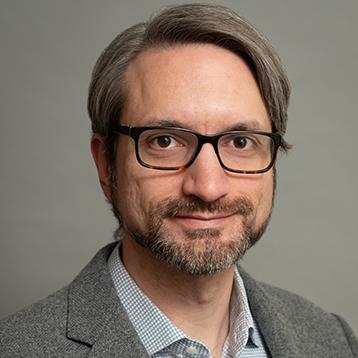
Aaron Johnson
Professor at Carnegie Mellon University
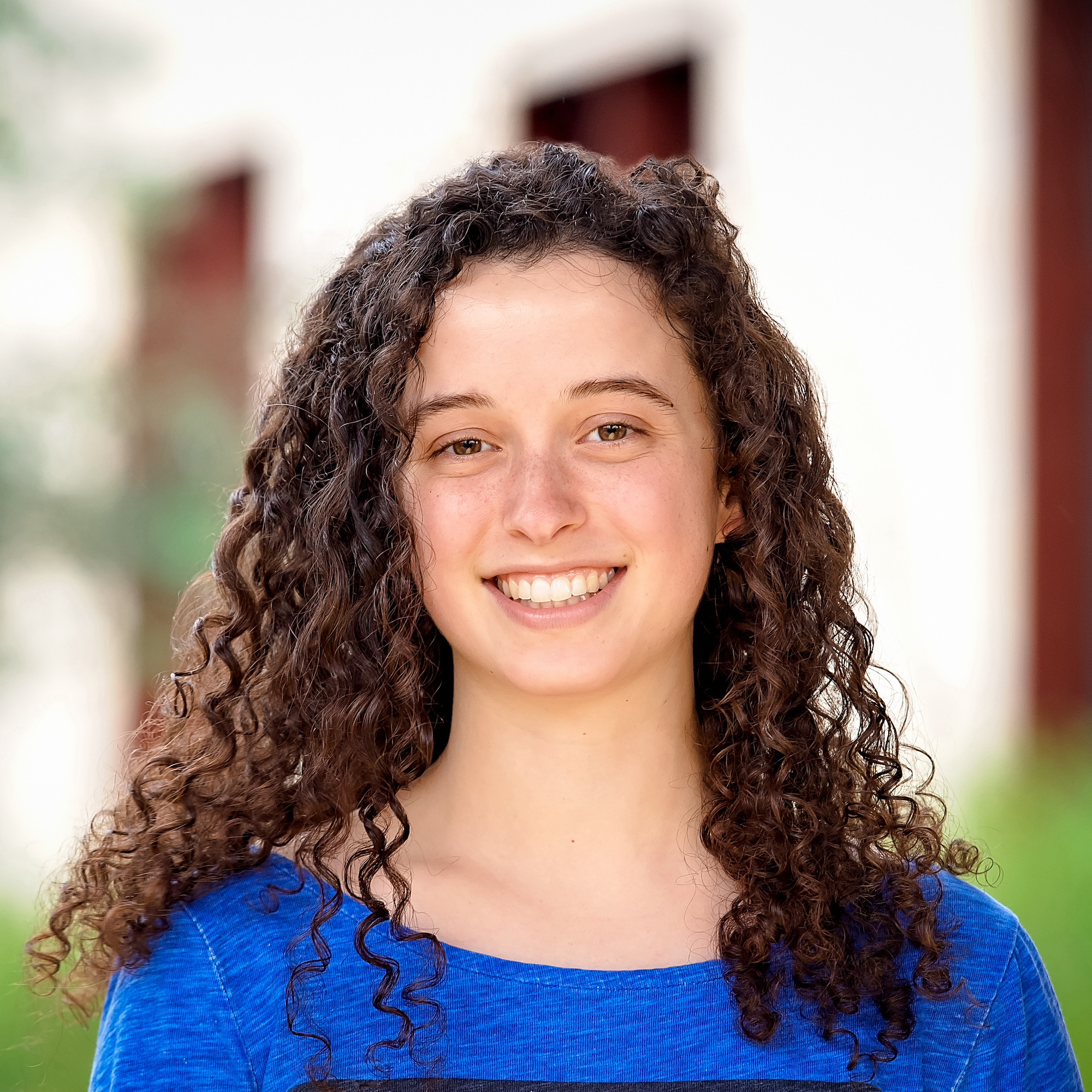
Bibit Bianchini
Ph.D. Student at the University of Pennsylvania

Dmitry Berenson
Associate Professor at University of Michigan
Emo Todorov
Professor at University of Washington
Hae-Won Park
Associate Professor at KAIST
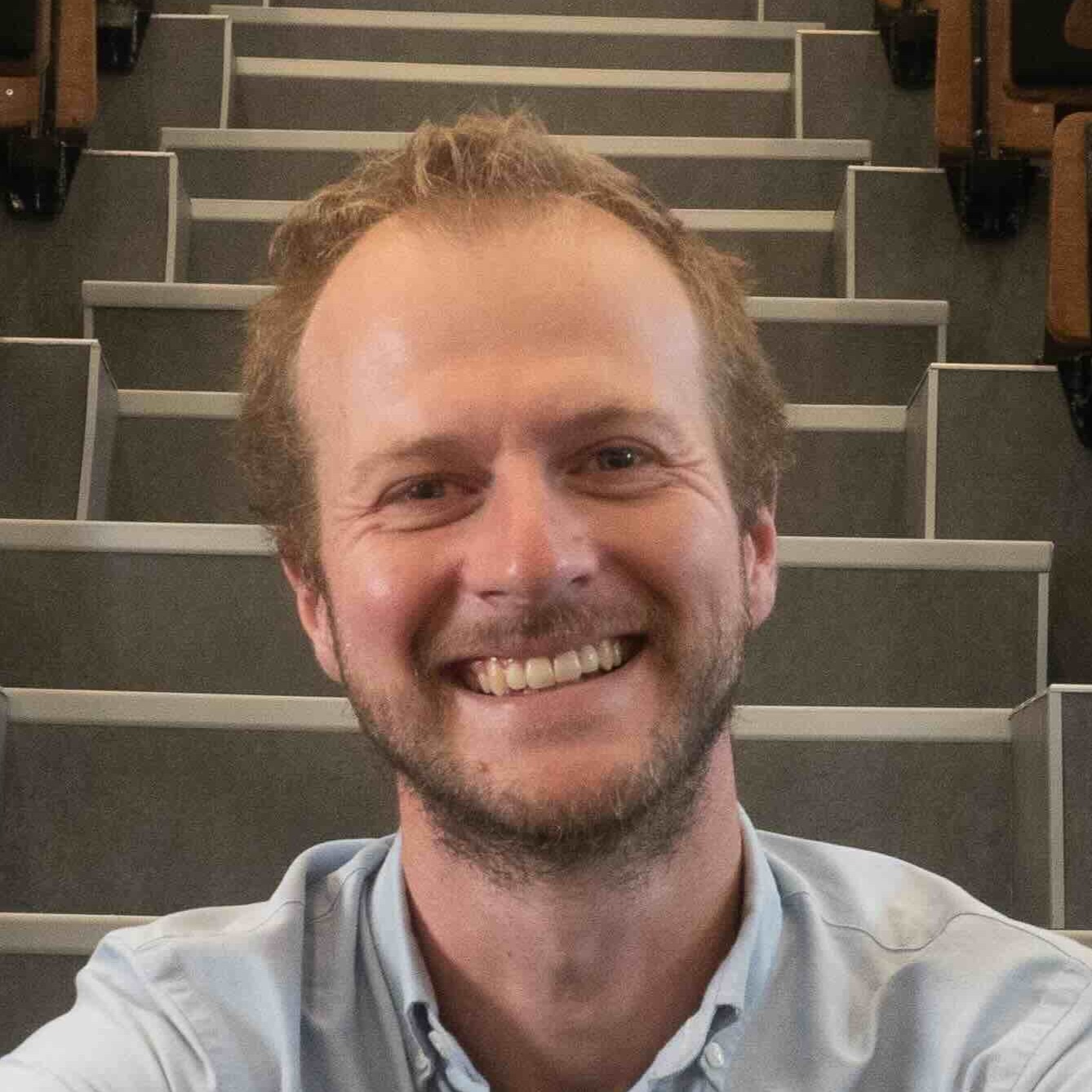
Justin Carpentier
Robotics Researcher at Inria
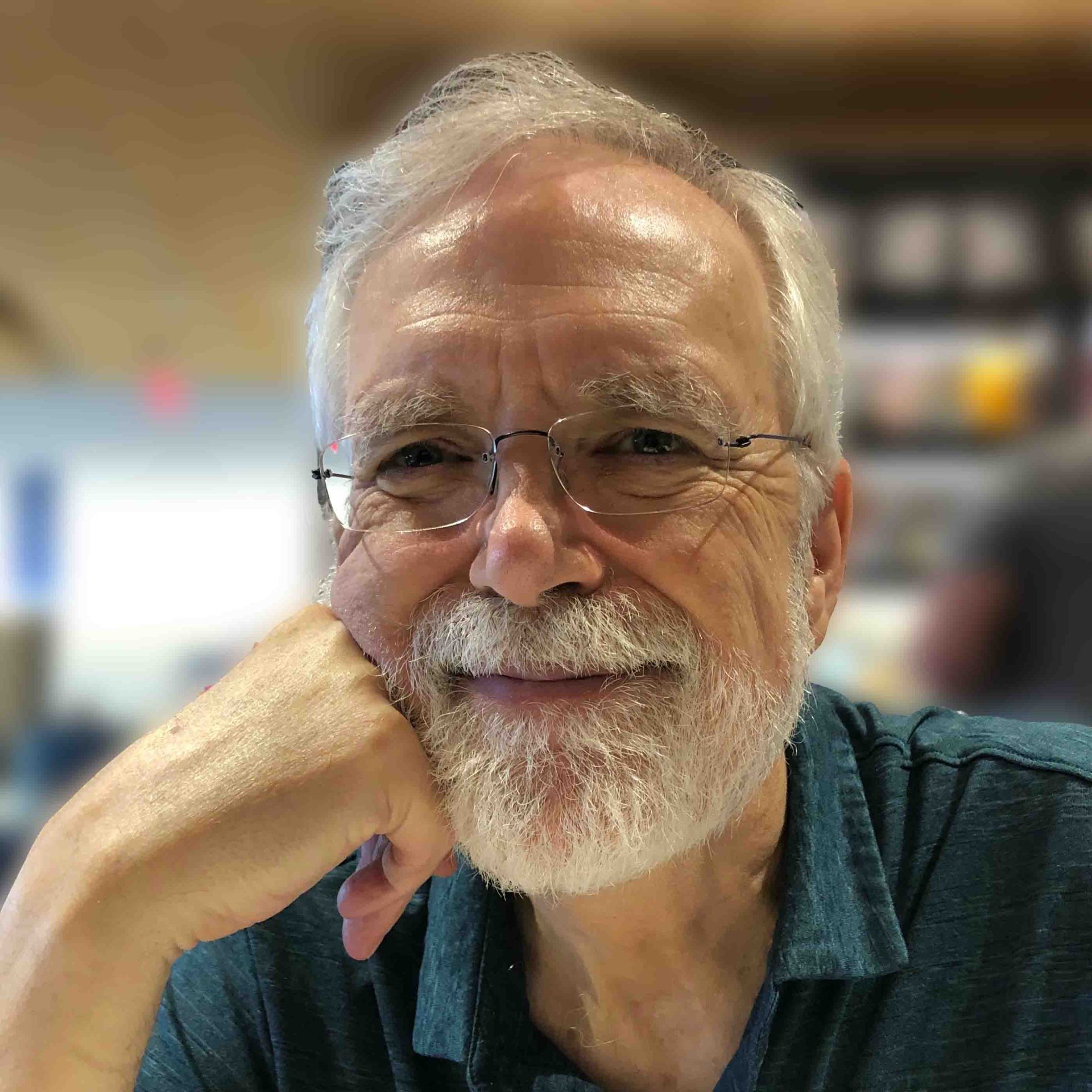
Matthew Mason
Professor Emeritus at Carnegie Mellon University and Chief Scientist at Berkshire Grey
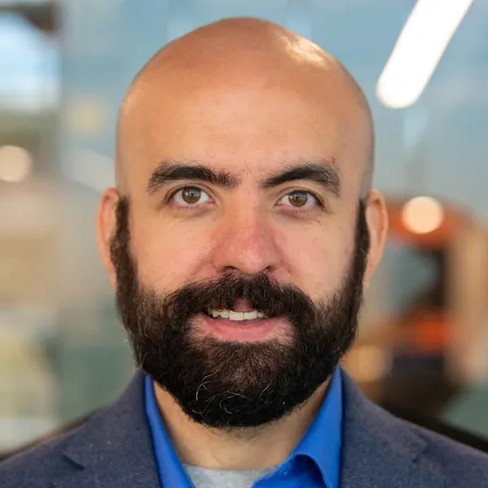
Nima Fazeli
Assistant Professor at the University of Michigan
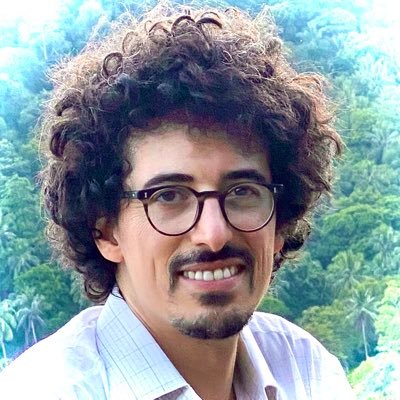
Yuval Tassa
Simulation Lead at Google Deepmind
Schedule
Spotlight talks are scheduled for 10 minutes of presentation plus 5 minutes of Q&A per talk. Strict time limits will be enforced.
| Time | Session | Speakers/Panelists |
|---|---|---|
| 09:00 – 09:15 | Welcome + intro | Organizers |
| 09:15 – 10:15 | Panel 1: Contact Model Representations | Nima Fazeli, Yuval Tassa |
| 10:15 – 11:00 | Coffee break + poster session (all accepted posters) | |
| 11:00 – 12:00 |
Spotlight talks: Simulation, Modeling, and Learning
|
|
| 12:00 – 01:30 | Lunch break | |
| 01:30 – 02:30 | Panel 2: Algorithms for Contact-Rich Control | Justin Carpentier, Bibit Bianchini, Hae-Won Park, Emo Todorov |
| 02:30 – 03:30 |
Spotlight talks: Control
|
|
| 03:30 – 04:15 | Coffee break + poster session (all accepted posters) | |
| 04:15 – 05:15 | Panel 3: State and Future for Contact-Rich Control | Matt Mason, Aaron Johnson, Dmitry Berenson |
| 05:15 – 05:30 | Conclusions | Organizers |
Accepted Posters
All accepted posters will be presented at both workshop poster sessions: 10:15 – 11:00 and 03:30 – 04:15.
Poster Information
ICRA 2026 provides poster print information for workshop presenters. Workshop posters should be in English, prepared as portrait/upright A0 PDFs (A0 = 84 x 119 cm, 33 in wide x 46 in high), with a maximum file size of 500 MB. The upright poster panel can accommodate posters up to 95 x 150 cm (37 in wide x 59 in high).
Presenters who would like to use the conference poster printing service can contact CTI Meeting Technology at icra@support.ctimeetingtech.com and include the workshop name, workshop day, and full name. Printing through CTI is optional; presenters may also bring a poster or use another supplier.
- GPU-Accelerated Hydroelastic Contact via Signed Distance Fields
Lennart Röstel, Yang Liu, Jessica Yin, Miguel Angel Zamora Mora, Miles Macklin, Philipp Reist, Tobias Widmer - Compliant Sphere Lattice Contact: Distributed Contact Modeling for Sphere-Based Robot Representations
Nataliya Nechyporenko, Ava Abderezaei, Alessandro Roncone - Tune to Learn: How Controller Gains Shape Robot Policy Learning
Antonia Bronars, Younghyo Park, Pulkit Agrawal - Distributionally Robust Control via Stein Variational Inference for Contact-Rich Manipulation
Hrishikesh Sathyanarayan, Victor Vantilborgh, Harish Ravichandar, Tom Lefebvre, Ian Abraham - Don’t Break the Egg: Branch-Rejoining Trajectory Optimization under Contact Timing Uncertainties
Zhuocheng Zhang, Haizhou Zhao, Xudong Sun, Aaron M. Johnson, Majid Khadiv - On Surprising Effects of Risk-Aware Domain Randomization for Contact-Rich Sampling-based Predictive Control
Sergio Esteban, Junheng Li, Vince Kurtz, Aaron Ames - Components of Contact: An Analysis of Contact-Implicit Control Strategies on Manipulation Primitives
Grey Sarmiento, Michael Posa - Self-Supervised Multisensory Pretraining for Contact-Rich Robot Reinforcement Learning
Rickmer Krohn, Vignesh Prasad, Gabriele Tiboni, Georgia Chalvatzaki - ImplicitRDP: An End-to-End Visual-Force Diffusion Policy with Structural Slow-Fast Learning
Wendi Chen, Han Xue, Yi Wang, Fangyuan Zhou, Jun Lv, Yang Jin, Shirun Tang, Chuan Wen, Cewu Lu - Contact-Rich Collaborative Path Clearing via Physics-Informed Corridor Search
Zili Tang, Meng Guo, Zishao Qiao, Zongyuan Li - Mind the Control Gap: Robot Learning from Mismatched Data
Kushal Kedia - Contact-Aware Probabilistic Reconstruction for Contact-Rich Manipulation
Aditya Kamireddypalli, Joao Moura, Russell Buchanan, Matias Mattamala, Sethu Vijayakumar, Subramanian Ramamoorthy - Curriculum-Aware Diffusion Distillation: Representing Contact Phases for Long-Horizon Door Manipulation
Zhe Han, Bingjie Chen, Zihan Wang, Yizhe Li, Guoping Pan, Yi Cheng, Houde Liu - Singulating an item from a pallet layer: Dual-arm manipulation with minimalistic end effectors by means of sampling-based MPC
Pavlos Theodosiadis, Alessandro Saccon, Thiago D. Simão - Learning Legged MPC with Smooth Neural Surrogates
Samuel A. Moore, Easop Lee, Boyuan Chen - STRIDE: Structured Lagrangian and Stochastic Residual Dynamics via Flow Matching
Ganga Nair B, Prakrut Kotecha, Shishir Kolathaya - Foot-terrain Deformation based Parameters Identification of MuJoCo for Simulation of Bipedal Locomotion on Deformable Terrain
Sunil Gora, Ashish Dutta - Novel Algorithms for Smoothly Differentiable and Efficiently Vectorizable Contact Manifold Construction
Onur Beker, Andreas René Geist, Anselm Paulus, Georg Martius - Predictive Safety Filters for Contact Rich Quadruped Locomotion
Aditya Shirwatkar, Aaron M. Johnson, Majid Khadiv, Shishir Kolathaya - Hierarchical Scene Graphs and Contact-Aware Behavior Trees for Learning and Executing Bimanual Manipulation
Kumar Manas, Franziska Herbert - Plasticity is Friction: Towards Controlling Deformables with Contact-Implicit MPC
Bibit Bianchini, Michael Posa - Learning Whole-Body Quadrupedal Pushing Across Geometry and Physics Variation
Ebasa Temesgen, Dhyan Thakkar, Sarah Boelter, Greta Brown, Maria Gini - Beyond Binary: Sim-to-Real Dexterous Manipulation with Physics-Aware Contact Representation
Jiahe Pan, Stelian Coros, Jitendra Malik, Toru Lin - Complementarity by Construction: A Lie-Group Approach to Solving Quadratic Programs with Linear Complementarity Constraints
Arun L Bishop, Micah Reich, Zac Manchester - Contact-Staged Stand-up Learning for Humanoids under Shifted Center-of-Mass Conditions
Sangbeom Park, Seunghyun Lee, Dongkyu Lee - Discovery of Dynamic Loco-manipulation Behaviors
Michal Ciebielski, Haizhou Zhao, Aaron M. Johnson, Majid Khadiv - Safe Contact-Rich Control under Smoothed Implicit Contact Dynamics
Haegu Lee, Yitaek Kim, Christoffer Sloth - PolyUMI: Visual + Auditory + Tactile Manipulation Platform for Imitation Learning
Conor Wood Hayes - IMPACT: An Implicit Active-Set Augmented Lagrangian for Fast Contact-Implicit Trajectory Optimization
Jiayun Li, Dejian Gong, Georgia Chalvatzaki - Uncertainty-Aware Contact-Implicit MPC via GPU-Parallelized ADMM
Herbert Wright, Michael Posa - FORTE: Force Optimization via Riemannian Trajectory Estimation for Zero-Shot Contact-Rich Manipulation
Ege Doganay
Calls for Participation
This workshop is emphasizing in-progress work and how our convictions and perceptions in the field are under constant change. In this spirit, we not calling for *any* invited speakers or presentations of published papers, especially papers that will be on the floor at ICRA. Instead, our calls for participation are below:
Call for abstracts
We strongly emphasize and encourage the submission of late-breaking, speculative, or otherwise unpublished material. In this submission category, please submit an abstract (no more than 4 pages, excluding references) in standard ICRA/IROS template. This submission will undergo a double-blind review process. Accepted abstracts will be presented at both poster sessions during the workshop.
Call for research talks
We have 8-10 slots for solicited talks (10-15 minutes) to be selected from submitted abstracts. The selection process will emphasize new and creative ideas or results that have not previously been published. Work centered around papers being presented at ICRA will not be considered. We particularly encourage submissions from more junior researchers, loosely defined. For your submission to be considered for a talk, please include a 2-3 minute video summary (with speaker audio) along with a brief abstract of the proposed talk. The video summary should serve as a preview of what you would present, though we understand that the details of the talk will evolve between the submission date and the workshop itself.
Submission Portal
All submissions should be made through OpenReview.
Topics of Interest
We welcome submissions related to, but not limited to, the following topics:
Contact Model Representations
- Learned vs. analytical contact models
- Structure-preserving learned models
- Rigid and compliant and differentiable contact models
- GPU-accelerated contact simulation
- Contact reasoning in visual world models
- Analytical and learned models for deformable objects, granular media
- Sim-to-real fidelity and accuracy requirements for control
Algorithms for Contact-Rich Control
- Sampling, differentiable simulation, and non-convex optimization methods
- Key challenges for deployment: scale, friction, and hybrid dynamics
- Evaluation and comparison of approximate solvers
- Convergence properties and contact mode discovery in local solvers
- Zeroth-order and gradient-based optimization for contact
- Sim-to-real policy transfer and adaptation
- Tactile and force feedback in contact-rich control
The State and Future of Contact-Rich Control
- Model-based and learning-based control
- Perception and high-dimensional sensing for contact-rich tasks
- Rigid body and deformable object manipulation
- Tools and infrastructure for contact-rich robotics
- Benchmarks and evaluation metrics for contact-rich control
Sponsors
Organizers
For questions or inquiries, please contact us at cr2-icra2026@mit.edu.